As a resident and vesting boater….
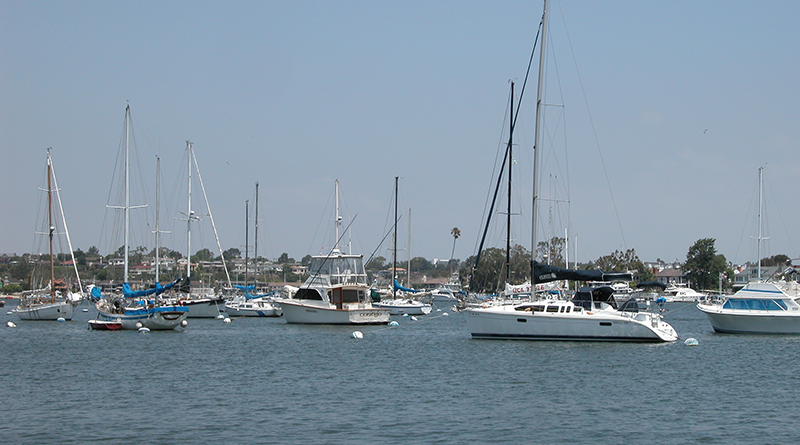
NEWPORT BEACH— Newport Harbor is widely regarded as one of Newport Beach’s defining features, and for both residents and visiting boaters, it stands out as one of the most well-managed recreational harbors in the country. Stretching more than three miles from the jetties at the harbor entrance to the quiet reaches of the Back Bay, Newport Harbor supports thousands of vessels, waterfront homes, commercial operations, mooring fields, guest anchorages, paddlers, anglers, ferries, and visitors every day. Keeping all of that activity safe, orderly, and environmentally responsible is the work of the City of Newport Beach Harbor Department.
For boaters, understanding how the harbor operates, where to go, what to expect, and what is required of you can make the difference between a stressful visit and an easy, enjoyable one.
The Harbor Department serves as the day-to-day ambassador of Newport Harbor. Harbor staff conduct daily patrols, assist boaters on the water, manage the guest marina at Marina Park, coordinate the use of anchorages and mooring fields, and enforce the City’s harbor rules. Staff are available seven days a week from 8:00 a.m. to 6:00 p.m. on Channel 17, by phone at 949-270-8159, or by email at [email protected]. After hours, non-emergency calls are handled through 949-644-3611, and emergencies on the water are handled by the Orange County Sheriff’s Harbor Patrol on Channel 12 or at 949-723-1002.
For visiting vessels, the journey begins at the harbor entrance between the two jetties marked by a flashing green light on the west jetty and a flashing red light on the east. Even though the entrance is wide and well-marked, traffic is often heavy, especially between April and November when the bait barge sits just inside the east jetty. The harbor’s 5-mph, no-wake zone begins immediately at the entrance and continues throughout the harbor.
Once inside, the main channel runs along the Balboa Peninsula, weaving between seven residential harbor islands before opening into larger basins near Lido Isle and the Back Bay entrance. Depths in the center of the channel average about 20 feet, but outside the channel depths can drop to eight or nine feet, particularly along Lido Isle. Vessels drawing more than six feet should monitor tide and depth carefully when leaving the main channel. Boaters must also watch for the Balboa Auto Ferry, which makes frequent crossings between Balboa Island and the peninsula, often with multiple ferries running at once during peak periods.
For those looking to stay overnight, the City operates Marina Park, the harbor’s visitor-serving marina, managed by a Certified Marina Operator through the Association of Marina Industries. Nightly slips are available for 40-foot and 55-foot vessels at $93 and $128 per night respectively, with overhang charges assessed at $2.37 per foot, per night. A $50 deposit is applied to the stay, and electricity is available for $19 plus actual usage. Dinghy rack rentals, group reservations, and key card access are also available. Reservations and availability can be handled directly through the Harbor Department.
Beyond slips, Newport Harbor maintains an extensive system of guest moorings and anchorages. Guest moorings are priced by lineal foot, ranging from $0.74 per foot per night for onshore moorings to $1.48 for offshore, with higher rates for large vessels over 80 feet and multihull vessels. Anchorage rates for large vessels using non-City tackle are $0.55 per foot per night. Dinghy storage and mooring exchanges are also available through the Harbor Department.
For residents and long-term boaters, Balboa Yacht Basin is a City-owned marina with 172 monthly slips ranging from 31 to 75 feet. Slip rates are based on either vessel length or slip length, whichever is greater, and are adjusted annually each summer based on a harbor index that compares rates at several moderately priced Newport Harbor marinas. The basin includes fresh water, electricity, dock boxes, restrooms, showers, a boatyard, storage garages, and security cameras.
Newport Harbor is also governed by the Harbor Commission, an appointed advisory body established by the City Charter. The commission advises the City Council on harbor permits, regulations, dredging priorities, sand replenishment, mooring service areas, public docks, and long-term harbor planning through the Harbor and Bay Element of the General Plan and the Tidelands Capital Plan. The commission meets on the second Wednesday of each month at 5:00 p.m., and correspondence sent to [email protected] becomes part of the public record.
One of the more misunderstood aspects of Newport Harbor is the concept of tidelands. Much of Lower Newport Harbor is owned by the State of California and administered by the City on the State’s behalf. The City is required to charge fair market rent for private use of these public assets, whether that use is a marina, concession, or mooring. Revenues generated from these tidelands are legally restricted to pay for harbor expenses such as dredging, maintenance, lifeguarding, and environmental management. These funds are audited annually, and in most years, expenses exceed revenue due to the high cost of maintaining beaches and waterfront safety.
Live-aboards are permitted in Newport Harbor but require an annual live-aboard permit, currently $454 per year. Applicants must hold a valid mooring permit and provide detailed vessel information, agree to inspections, maintain pump-out logs, and strictly follow Newport Harbor’s designation as a no-discharge zone. Nothing but clean water may enter the harbor. Ten public pump-out stations and mobile services are available, and strict documentation of waste disposal is required.
All harbor users are subject to Newport Beach Municipal Code Section 17, commonly known as the Harbor Code. The general rules are straightforward but strictly enforced: 5-mph speed limit, no wake, no discharge, no dumping of trash, no unreasonable noise between 10:00 p.m. and 7:00 a.m., and the use of approved methods to deter sea lions from resting on vessels. Stand-up paddleboards are legally considered vessels and must carry a life jacket, whistle, and light, with violations subject to citations up to $1,000.
Environmental stewardship is a major part of harbor life. Boaters are expected to use absorbent bilge pads, avoid any in-water cleaning products, use tarps and vacuum sanders during maintenance, prevent fuel spills, and properly dispose of fish waste and trash on shore. Even biodegradable soaps are not permitted to enter the water. Fueling must be done carefully without topping off tanks, and portable tanks should always be filled onshore.
The Harbor Department also oversees a wide range of permits and services, including large boat permits, special event permits for raft-ups and boat races, marine activity permits for charter and service providers, mooring extensions, variance applications, and dinghy rack rentals. Waitlists exist for Balboa Yacht Basin slips, live-aboard status, mooring licenses, and dinghy storage.
For boaters who find themselves in violation of harbor rules, fees can escalate quickly. Towing, impound, environmental response, sea lion deterrent measures, after-hours mooring assistance, and even unsuccessful appeal hearings all carry substantial fees designed to discourage misuse of harbor resources.
At its core, Newport Harbor functions smoothly because of a partnership between the City, its Harbor Department, the Harbor Commission, residents, and visiting boaters. The rules are detailed, the oversight is active, and the expectations are clear, but it’s all designed with a single goal: keeping Newport Harbor clean, safe, and well-enjoyed for generations to come.
For more information, please visit newportbeachca.gov/government/departments/harbor.